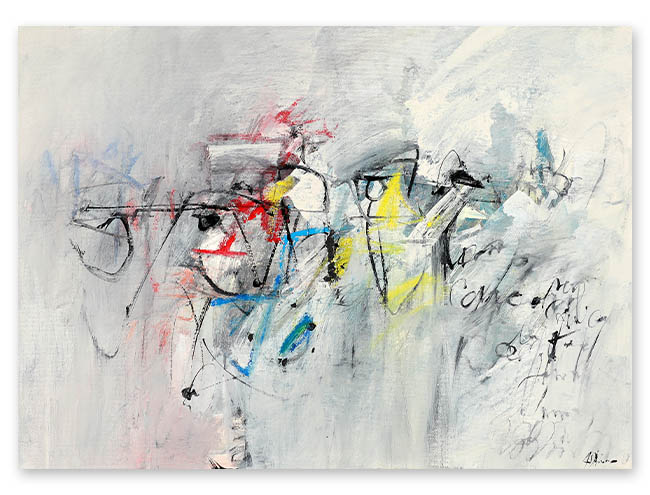
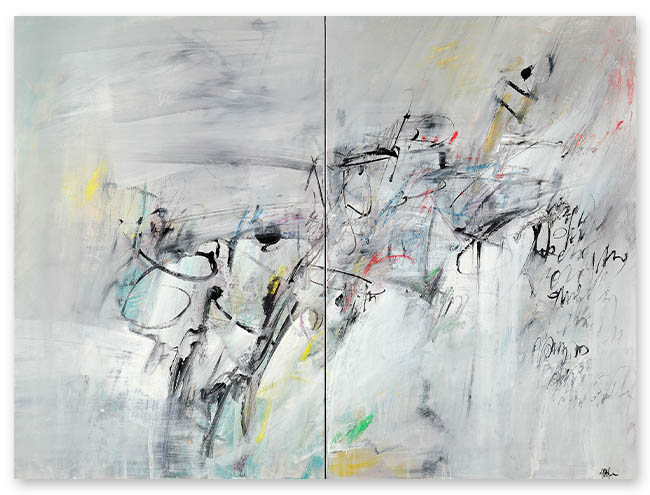
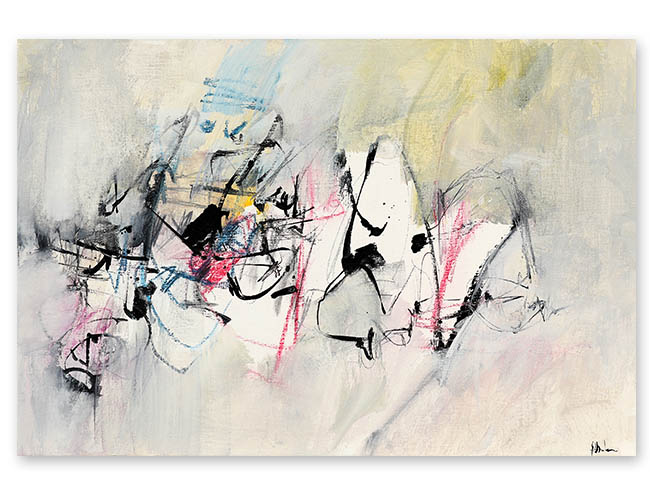
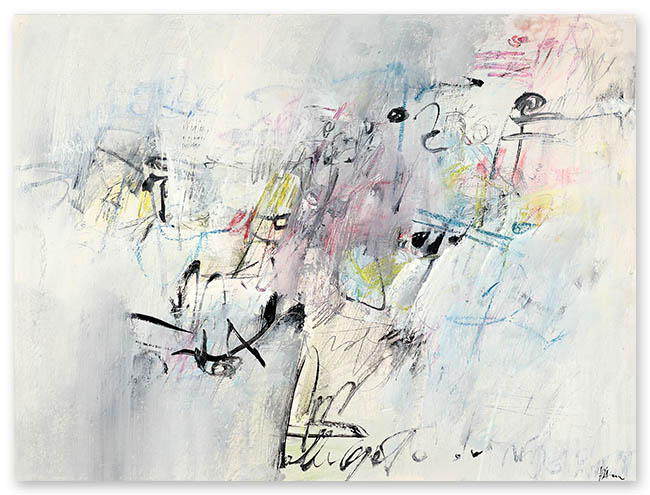
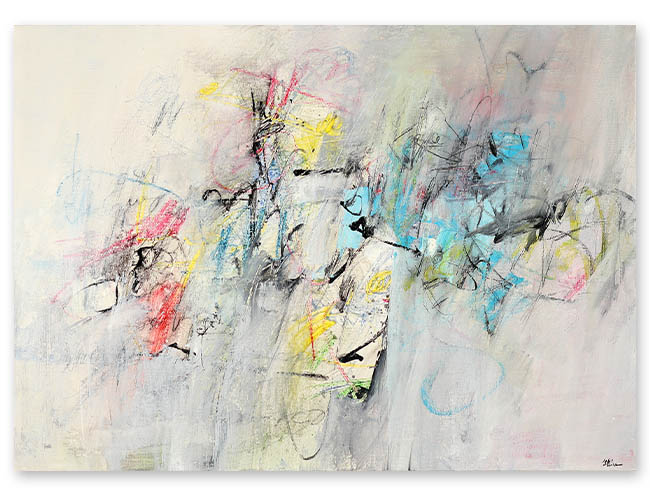
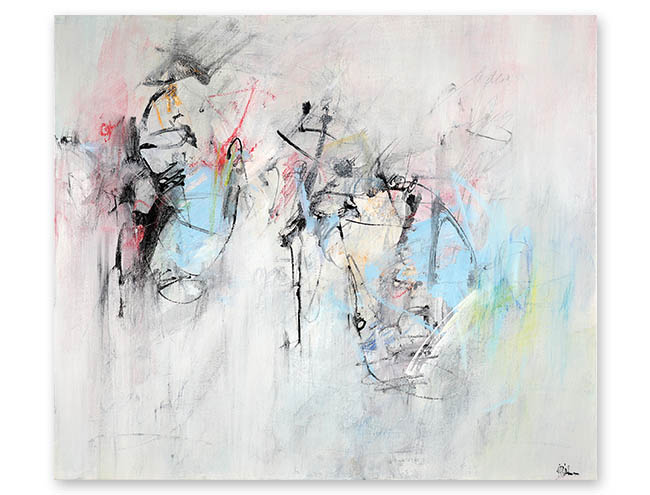
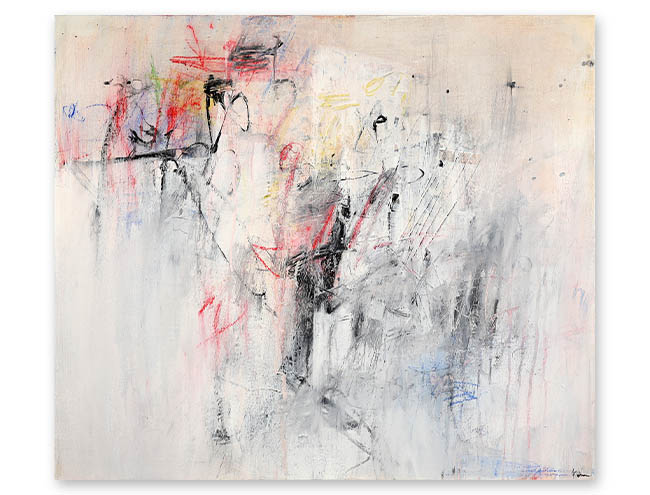
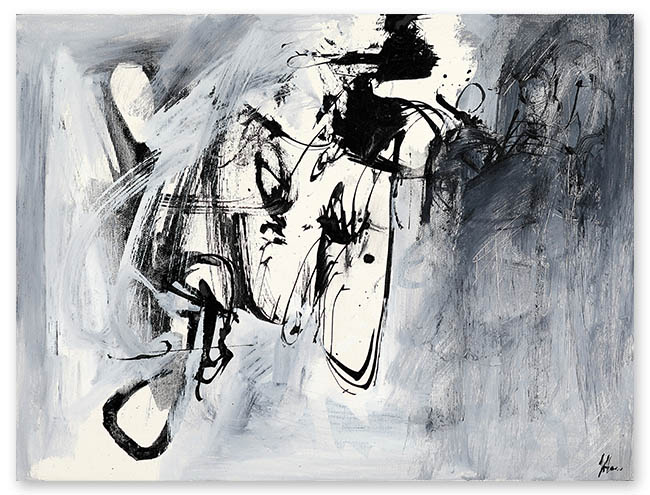
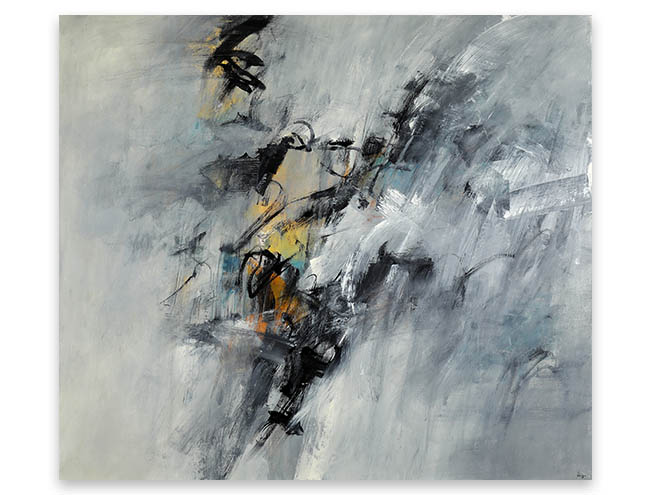
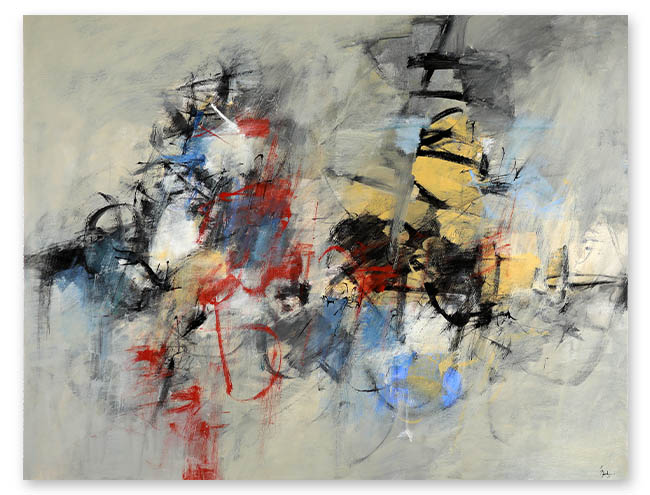
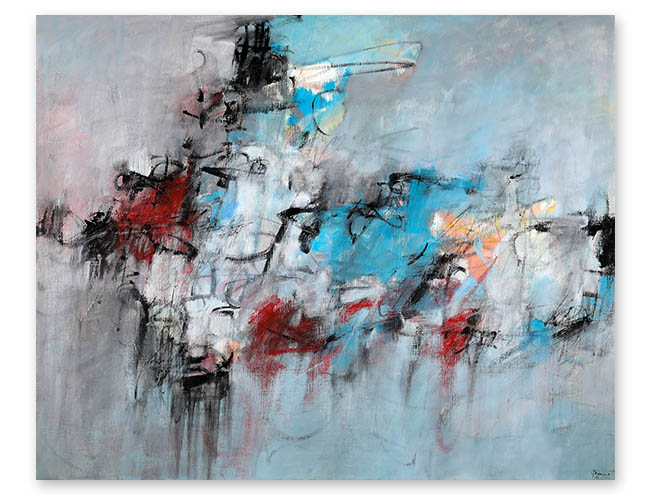
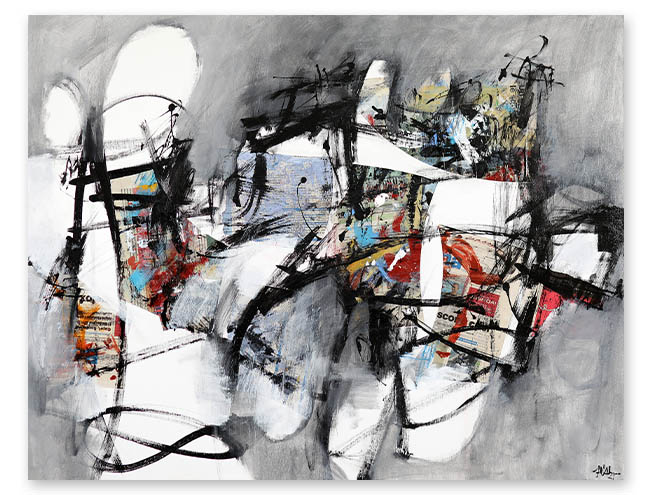
“Grey is a word we all know well. We often use it with a qualitative, and usually negative, connotation—signifying a lack of something. A grey sky, for instance, appears stripped of color and everything color implies. Thus, grey is frequently felt as an absence. Yet, it is an absence that carries a sense of temporariness. Perhaps this makes it more bearable; at times, we even find value in its fleeting nature.
There are cases, however, where this absence lingers. The grey becomes so solidly structured that it seems to lose its transience, reversing the relationship between absence and presence. Waiting for a change feels futile, unsustainable. With a grey of this magnitude, one must come to terms and reformulate a new kind of coexistence. The paintings in this series seek exactly this dialogue.
For some years now, in the place I moved to, I have come to know a different kind of grey. It arrives between October and early November and does not leave until late March. During this period, colors vanish, shadows and volumes fade, and distances grow vague. Shapes lose their contours, and the only visible lights are artificial: cars, storefronts, gas stations. This entire, indefinite theater seems tethered by thin black lines—electricity cables that link every object before dissolving into the fog.
The paintings in this series are not a literal abstraction of the Emilian winter landscape. Yet, they are undeniably its result, and perhaps a reaction to it. Grey is a sphere far more complex and inscrutable than a simple mixture of black and white. Grey can be a doubt, a mystery, or even a crisis. It can possess density, even when veiled. Ultimately, grey can reward you by revealing the fundamental structure of things.”
Excerpt from Decade (2021)